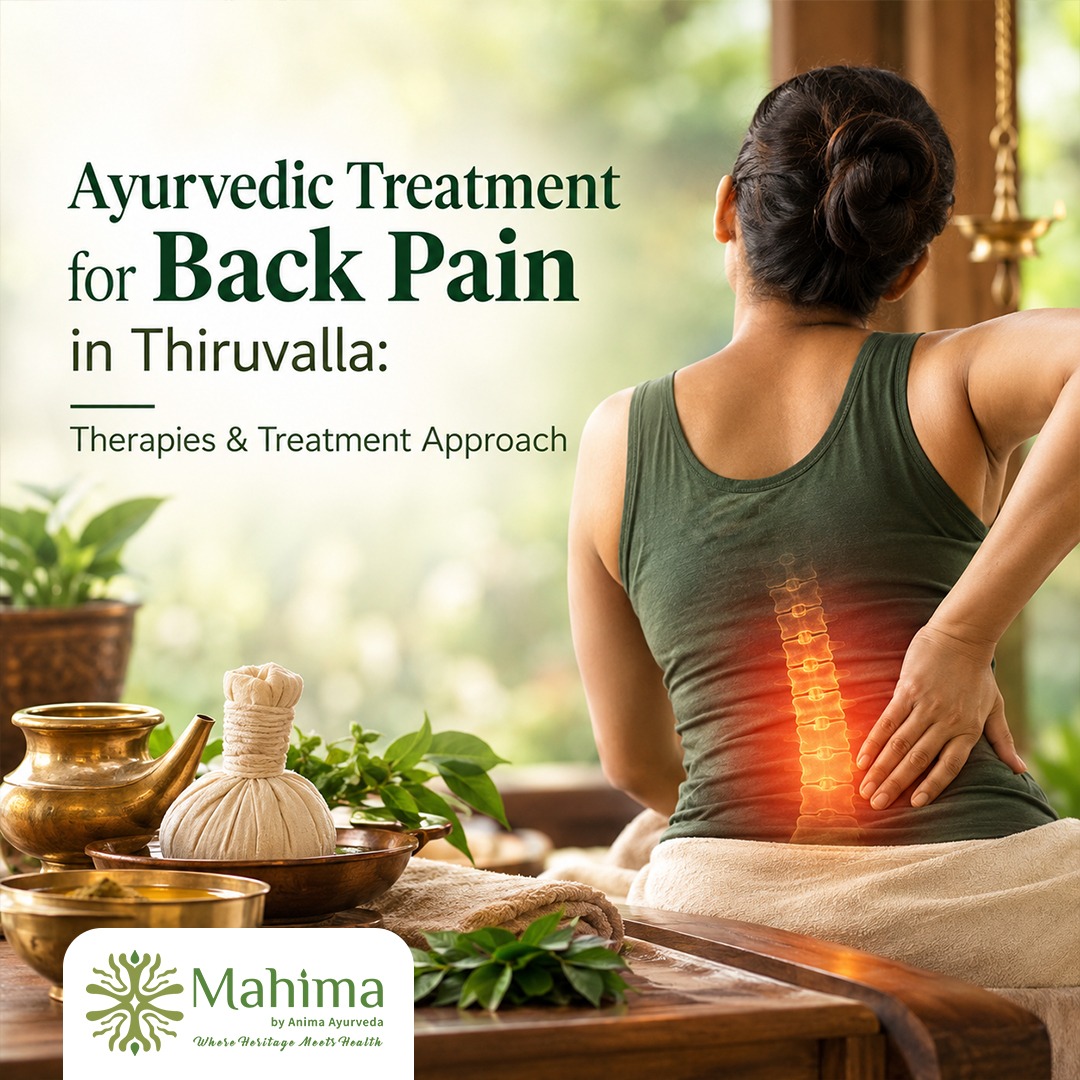
How Is Back Pain Treated in Ayurveda?
Ayurvedic management of back pain is generally individualized rather than based on one standard therapy. A physician may combine internal medicines, external oil-based or heat-based therapies, lifestyle and dietary recommendations, activity modification and, where appropriate, selected Panchakarma procedures.
From an Ayurvedic perspective, the physician evaluates the patient's symptoms and individual constitution alongside other clinical factors before deciding on treatment.
From a broader medical perspective, it is equally important to determine whether the pain appears to be uncomplicated mechanical back pain or whether there are signs suggesting a more serious underlying problem.
A typical treatment pathway may therefore look like:
Consultation → assessment → treatment selection → therapy/medicines → progress review → modification if necessary → follow-up
The objective should not simply be to prescribe the maximum number of therapies. Each treatment should have a reason for being included.
What Causes and Types of Back Pain Should Be Considered Before Treatment?
Back pain can result from muscle or ligament strain, prolonged sitting, poor movement habits, injury, age-related changes, disc-related problems, sciatica and several other conditions. Less commonly, infection, fracture, inflammatory disease or other serious medical problems can cause back pain.
Understanding the pattern helps determine the next step.
Acute vs Chronic Back Pain
Acute back pain develops recently and may follow lifting, sudden movement or physical strain.
Chronic back pain persists for a longer period or repeatedly returns. Long-standing symptoms often require a broader assessment of activity, occupation, movement, sleep, previous injuries and underlying diagnoses.
Lower Back Pain
Pain around the lumbar region is particularly common. It may remain localized or occur with stiffness and restricted movement.
Back Pain With Sciatica-Type Symptoms
Pain that travels from the lower back or buttock down a leg, particularly when accompanied by tingling, numbness or weakness, deserves appropriate clinical evaluation because nerve involvement may be present.
Before beginning an Ayurvedic programme, tell the doctor about previous MRI or X-ray findings, injuries, operations, osteoporosis and other medical diagnoses.
Which Ayurvedic Therapies Are Commonly Used for Lower and Chronic Back Pain?
Depending on the physician's assessment, treatment may involve Abhyanga, Kati Basti, Kizhi/Pinda Sweda, Swedana and other localized or whole-body therapies, sometimes alongside prescribed medicines and lifestyle recommendations.
The Government of India's Central Council for Research in Ayurvedic Sciences (CCRAS) describes several of these traditional therapeutic approaches in its Ayurveda publications.
The important distinction is that these therapies are not interchangeable.
Someone experiencing mild muscular stiffness after long hours at a desk may receive a different plan from a person with chronic lower-back pain and radiating leg symptoms.
Patients should therefore avoid choosing therapies solely from a treatment menu.
How Is Abhyanga Used in Back Pain Management?
Abhyanga is an Ayurvedic external therapy involving the application and massage of oil over the body or a selected area. When included in a back-pain programme, the physician determines the oil, area treated, duration and whether it should be combined with other procedures.
It may be incorporated into a broader programme intended to address stiffness, mobility or musculoskeletal discomfort.
Abhyanga should not, however, be treated as a substitute for diagnosis.
If a person has severe unexplained pain, a recent injury, progressive neurological symptoms or another potentially serious condition, determining the cause takes priority over simply scheduling an oil massage.
What Is Kati Basti, and How Is It Used for Lower Back Pain?
Kati Basti is a localized Ayurvedic procedure in which comfortably warm medicated oil is retained over the lumbosacral region for a prescribed period using a boundary traditionally prepared from dough. It is one of the therapies an Ayurvedic physician may consider in a lower-back treatment programme.
CCRAS specifically describes Kati Basti as retaining comfortably warm medicated oil over the lumbosacral or adjacent area within a boundary made from black-gram dough.
The procedure is therefore different from a conventional massage.
A typical session may involve preparing the lower-back area, forming the boundary, placing the prescribed warm oil within it and maintaining the treatment for the physician-directed period.
The oil used, temperature, duration and number of sessions should be determined according to the individual rather than copied from another patient's treatment plan.
How Is Kizhi Used for Back Pain?
Kizhi, also known in different forms as Pinda Sweda, generally involves therapeutic application using bundles containing physician-selected herbal or other materials.
Different preparations may be selected according to the treatment objective.
The bundle may be warmed and applied using a prescribed technique, often as part of a wider treatment programme.
The important point for patients is that “Kizhi” does not refer to one identical procedure in every situation.
Ask which type is being recommended, what it contains, why it has been selected and whether there are precautions relevant to your condition.
Can Panchakarma Be Recommended for Back Pain?
An Ayurvedic physician may consider selected Panchakarma procedures for some patients after individual assessment, but Panchakarma should not automatically be prescribed to everyone with back pain. The appropriate procedure depends on the patient's health, symptoms, strength, medical history and Ayurvedic clinical assessment.
Panchakarma is also broader than massage or oil application.
CCRAS describes Panchakarma as a structured therapeutic approach containing principal procedures alongside preparatory and post-procedure care.
Whether any particular Panchakarma procedure is appropriate requires physician evaluation.
This is especially important if you are older, take multiple medicines or have diabetes, cardiovascular disease, osteoporosis or another existing health condition.
Be cautious if a centre sells a fixed “7-day back pain Panchakarma package” before a doctor has properly assessed you.
How Does an Ayurvedic Doctor Personalize Back Pain Treatment?
A personalized plan should consider where the pain occurs, how long it has been present, what triggers or relieves it, whether it radiates, mobility limitations, occupation, physical activity, sleep, diet, medical history, current medicines and the physician's Ayurvedic assessment.
Consider two people experiencing lower-back pain.
Patient A: A 32-year-old software professional spends nine hours sitting each day. The pain is mainly stiffness around the lower back and does not travel into the legs.
Patient B: A 58-year-old has persistent lower-back pain accompanied by numbness extending into one leg and has previously been diagnosed with a lumbar disc problem.
Both say, “I have back pain,” but treating them as identical patients would ignore important differences.
The doctor may also review existing investigations rather than automatically ordering or dismissing them. If you already have an MRI, X-ray, blood-test report or specialist diagnosis, bring it to your consultation.
What Role Do Lifestyle and Daily Habits Play?
Back-pain management should not necessarily end when a therapy session finishes.
Depending on the cause and individual circumstances, the physician may discuss activity, prolonged sitting, lifting habits, sleep, diet or appropriate exercise.
For someone working at a desk, for example, receiving a therapy and then returning to the same uninterrupted sitting pattern for 10 hours each day may fail to address an important contributor to the problem.
Where appropriate, a broader management plan may therefore include:
- Breaking up prolonged sitting
- Gradually returning to appropriate activity
- Reviewing lifting and movement habits
- Maintaining suitable physical activity
- Following prescribed home-care instructions
- Taking medicines only as directed
- Attending scheduled reviews
Exercise recommendations should match the person's condition. Someone with neurological symptoms or a diagnosed spinal problem may require a different approach from someone with uncomplicated muscular discomfort.
How Long Does Ayurvedic Treatment for Back Pain Usually Take?
There is no standard number of days or therapy sessions that works for every back-pain patient. Duration depends on the cause, whether symptoms are acute or chronic, their severity, treatment selected, overall health and how the individual responds.
One patient may require a short period of treatment and lifestyle modification.
Another with a long-standing condition may require a longer programme with periodic reviews.
This makes claims such as “back pain cured in seven days” problematic.
A better question to ask your doctor is:
“When will you review my progress, and how will you decide whether the treatment should continue or change?”
Treatment should have measurable goals. These might include changes in pain, ability to walk or sit comfortably, sleep disruption, range of movement or ability to perform normal daily activities.
If there is no meaningful improvement, reassessment may be appropriate.
What Can You Expect During Ayurvedic Back Pain Treatment?
Your experience will depend on the prescribed programme, but a properly structured process should begin with consultation rather than therapy.
Before treatment, you should understand what the doctor thinks may be contributing to your symptoms, what therapy is proposed, what medicines are being prescribed, relevant precautions, expected duration and when progress will be reviewed.
During therapy, communicate any excessive heat, pain, dizziness, skin reaction or other unexpected discomfort.
After each stage of treatment, follow the physician's instructions concerning medicines, activity, diet and home care.
Also remember that Ayurvedic medicines should not automatically be assumed risk-free because they are described as natural. NCCIH notes that some Ayurvedic preparations have been found to contain potentially toxic levels of metals and advises people not to use Ayurveda to postpone necessary conventional medical care.
For independent patient information about Ayurveda, see the National Center for Complementary and Integrative Health's Ayurveda overview.
When Should Someone With Back Pain Seek Medical Evaluation?
Back pain should be medically evaluated when it is severe, persistent, follows significant trauma, progressively worsens, or occurs with concerning neurological or systemic symptoms. Some presentations require prompt assessment rather than starting with massage or other complementary treatment.
Seek urgent medical attention particularly for new problems controlling the bladder or bowel, numbness around the saddle/genital area, or severe/progressive weakness or neurological symptoms. These can be associated with serious nerve compression such as cauda equina syndrome.
Other concerning circumstances include significant trauma, suspected fracture, fever or systemic illness accompanying back pain, and symptoms that raise concern for infection or malignancy.
NICE's guideline on low-back pain stresses the importance of screening for serious spinal pathology and neurological complications rather than treating every presentation as routine mechanical back pain.
In other words, therapy should never delay investigation of warning signs.
What Should You Check Before Choosing an Ayurvedic Hospital in Thiruvalla?
If you are considering an Ayurveda hospital in Thiruvalla for back-pain treatment, evaluate the quality of clinical care rather than simply comparing treatment packages.
Check whether a qualified Ayurvedic physician examines you before therapy, whether your medical history and existing reports are reviewed, and whether the doctor can explain why each proposed treatment is appropriate.
Also look at hygiene, medicine transparency, therapist supervision, treatment-room standards, costs and follow-up arrangements.
Be cautious about:
guaranteed-cure claims,
fixed treatment packages without assessment,
advice to ignore serious neurological symptoms,
pressure to stop prescribed medication without appropriate medical coordination,
or reluctance to refer a patient for further investigation when warning signs are present.
Patients researching Ayurvedic care locally can review the treatment approach and services available through Mahima by Anima Ayurveda and discuss their specific back-pain symptoms with a qualified physician before deciding on a programme.
Ayurvedic treatment for back pain in Thiruvalla may involve physician assessment, individualized medicines, Abhyanga, Kati Basti, Kizhi, other external therapies, lifestyle recommendations and selected Panchakarma procedures where clinically considered appropriate.
But the name of the therapy should never be the starting point.
A safer and more useful sequence is:
Understand the symptoms → rule out warning signs → identify relevant contributing factors → receive an individual assessment → choose appropriate treatment → monitor progress → reassess when necessary.
For someone with straightforward muscular discomfort, the treatment approach may be relatively simple. Someone with chronic pain, radiating symptoms, an existing spinal diagnosis or neurological changes may require a different level of evaluation and coordinated care.
The goal should therefore not be to find the hospital offering the most therapies. It should be to find one that understands which treatment, if any, is appropriate for your particular back-pain presentation.
Frequently Asked Questions
Is Kati Basti used for lower-back pain?
Kati Basti is a traditional localized Ayurvedic procedure involving retention of comfortably warm medicated oil over the lumbosacral area. CCRAS includes it among Ayurvedic therapeutic approaches. Whether it is appropriate for a particular back-pain patient should be decided after physician assessment.
Is Abhyanga good for back pain?
Abhyanga may be incorporated into some Ayurvedic musculoskeletal treatment programmes, but it should not replace appropriate evaluation of persistent, severe or neurologically complicated back pain.
How many Kati Basti sessions are needed for back pain?
There is no universal number. The recommended frequency and duration depend on the patient's symptoms, underlying problem, treatment plan and response.
Can Panchakarma help chronic back pain?
Selected Panchakarma procedures may be recommended by Ayurvedic physicians for some patients, but Panchakarma is not automatically appropriate for everyone with chronic back pain. Individual assessment is necessary.
Can Ayurveda cure a slipped disc?
Be cautious about any guarantee that Ayurveda—or another treatment—will “cure” every slipped or herniated disc. Disc-related symptoms vary considerably. A person with a known or suspected disc problem should have an appropriate clinical assessment, particularly if pain radiates into the leg or neurological symptoms occur.
Should I take my MRI report to an Ayurvedic doctor?
Yes. If you already have MRI, X-ray, blood-test or specialist reports related to your back pain, take them to the consultation along with details of current medicines and previous treatments.
When is back pain an emergency?
Seek urgent medical attention for back pain accompanied by new bladder or bowel dysfunction, saddle-area numbness, or severe/progressive neurological weakness. Significant trauma or symptoms suggesting serious illness also warrant prompt evaluation.
How do I choose an Ayurvedic hospital in Thiruvalla for back pain?
Look for qualified physicians, assessment before therapy, individualized treatment, hygienic facilities, clear medicine information, realistic claims, transparent costs, progress reviews and willingness to refer for further medical evaluation when necessary.