What Types of Ayurvedic Treatments Are Available in Thiruvalla?
Ayurvedic treatment centres in Thiruvalla may provide consultations, internal medicines, external therapies, Panchakarma procedures, diet and lifestyle guidance, yoga, rejuvenation programmes, and condition-specific care. Services vary between hospitals, so treatment should be selected after assessment by a qualified Ayurvedic physician.
For example, Mahima by Anima Ayurveda lists Ayurvedic consultation, Panchakarma, Abhyanga, Shirodhara, postnatal care, yoga and meditation, wellness programmes, Ayurvedic cosmetology, and neurology and spine care among its services.
Broadly, treatment may involve three components:
Internal treatment: Ayurvedic medicines prescribed according to the physician's assessment.
External therapies: Procedures involving oils, herbal preparations, heat, massage or other techniques.
Diet and lifestyle: Recommendations concerning food, sleep, physical activity, routines, yoga or other behavioural factors.
Not every patient needs all three, and not everyone visiting an Ayurvedic hospital in Thiruvalla needs Panchakarma.
What Health Conditions Are Commonly Managed Through Ayurvedic Treatment?
People seek Ayurvedic care for a wide variety of concerns, including musculoskeletal problems, digestive complaints, lifestyle-related concerns, rehabilitation, stress and sleep-related complaints, women's health, skin concerns, and general wellness.
Some hospitals also provide specialized programmes for areas such as postnatal recovery, weight management, neurological rehabilitation, and spine-related conditions.
The Central Council for Research in Ayurvedic Sciences (CCRAS), under the Ministry of Ayush, operates clinical services that include general Ayurveda consultations, Panchakarma and specialist services, and its research programmes cover areas including metabolic disorders.
However, an important distinction should be made between “commonly managed” and “proven to cure.”
The quality and strength of scientific evidence vary substantially across Ayurvedic treatments and health conditions. Patients should therefore be cautious about centres promising guaranteed cures for chronic or serious diseases.
Ayurveda should also not delay emergency or necessary conventional medical treatment. Severe chest pain, stroke symptoms, serious injuries, severe breathing difficulty, major bleeding, or other emergencies require prompt medical attention.
What Are the Most Common Ayurvedic Therapies, and How Do They Work?
Ayurvedic hospitals may offer numerous therapies, but some names appear frequently in Kerala treatment programmes.
Abhyanga
Abhyanga is an external therapy involving the application and massage of oil over the body or selected areas.
The oil, duration and technique may differ according to the treatment plan. It may also be used as part of preparatory procedures for certain Panchakarma programmes.
Shirodhara
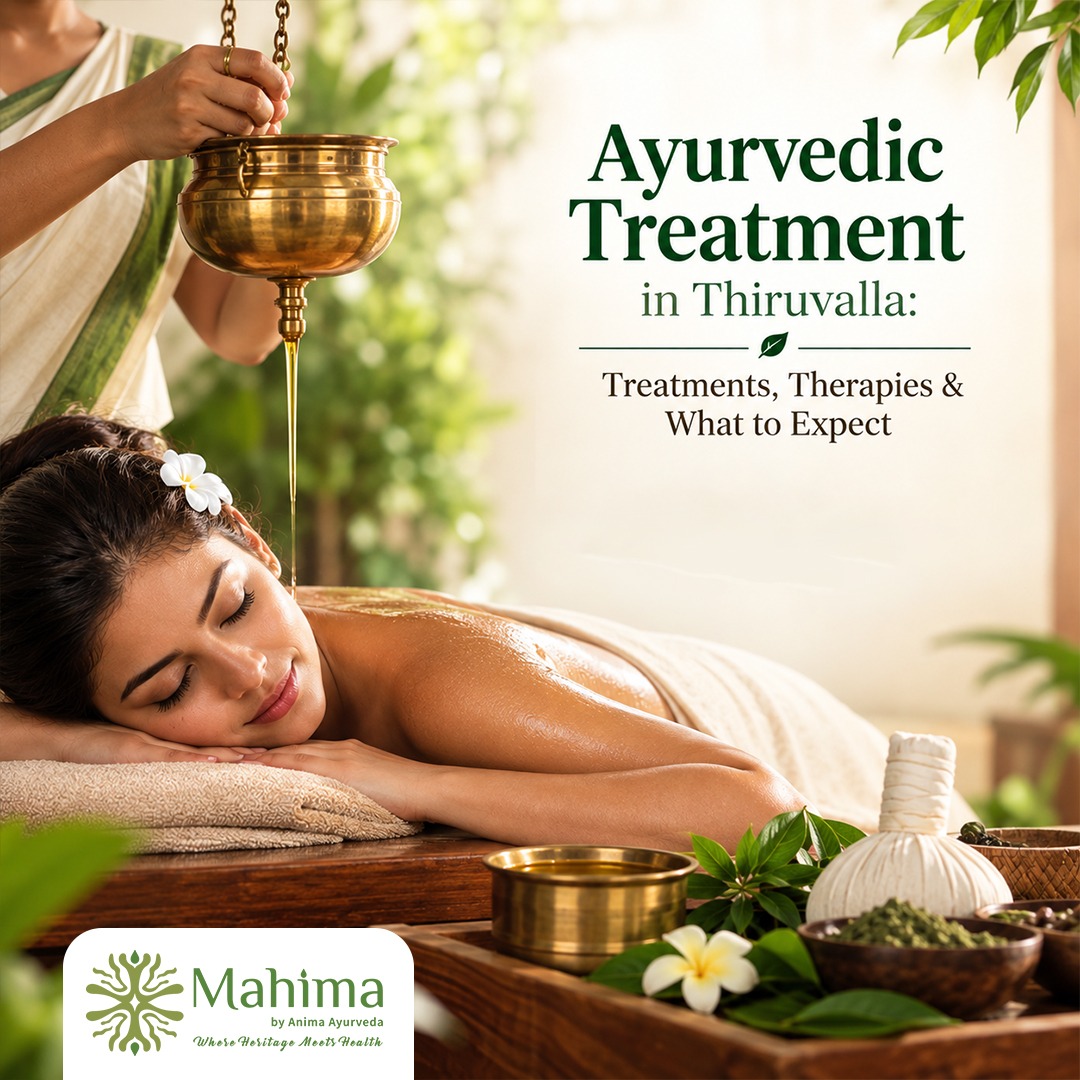
Shirodhara involves the controlled flow of a liquid, commonly medicated oil or another physician-selected preparation, over the forehead for a specified period.
It is commonly included in relaxation and wellness-oriented Ayurvedic programmes, but suitability should still be assessed individually.
Swedana
Swedana refers broadly to therapeutic sweating or fomentation procedures.
Different forms may be used, sometimes following oil application, depending on the physician's assessment and intended treatment.
Kizhi or Pinda Sweda
These treatments typically use bundles containing selected herbal materials or other prescribed substances, which are applied to the body using a particular technique.
Different forms of Kizhi are used for different purposes, so patients should not assume that all “Kizhi treatments” are identical.
Nasya
Nasya involves administration of prescribed substances through the nasal route and is also included among procedures associated with Panchakarma.
The key point is that a therapy name alone does not tell you whether it is appropriate for your condition.
Ask why it has been recommended and what the physician expects it to achieve.
What Is Panchakarma Treatment?
Panchakarma is an Ayurvedic therapeutic framework involving preparatory, principal and post-procedure stages. CCRAS describes its principal procedures as Vamana, Virechana, oil and decoction forms of Basti, and Nasya; other official AYUSH descriptions may classify the five procedures somewhat differently.
In simple terms, Panchakarma should not be understood as a single massage or a generic “detox package.”
The CCRAS framework describes three broad stages:
Purvakarma: preparatory procedures such as Snehana and Swedana.
Pradhanakarma: the principal physician-selected therapeutic procedure.
Paschatkarma: post-procedure care, including dietary and recovery measures.
The appropriate procedure depends on the individual.
This is why a centre should not recommend the same Panchakarma package to every person who walks through the door.
Who May Be Advised to Undergo Panchakarma?
Panchakarma should be considered only after an Ayurvedic physician evaluates whether a particular procedure is suitable for the patient.
Age, general health, medical history, symptoms, physical strength, current medicines, and the intended therapeutic goal may influence the decision.
Some people may be advised to undergo only selected external therapies or medical management rather than a full Panchakarma programme.
CCRAS material describes different Panchakarma procedures being used for different clinical presentations rather than one universal procedure for every patient.
Before booking a Panchakarma package, therefore, ask:
Which specific procedure is being recommended, why is it appropriate for me, what preparation is required, and what precautions apply?
What Happens During Your First Ayurvedic Consultation?
Your first consultation should involve a detailed discussion of your current complaint, health history, diet, lifestyle, sleep, digestion, previous illnesses, existing diagnoses, and medicines. The Ayurvedic doctor may then conduct an examination and use Ayurvedic assessment principles to develop an individualized treatment plan.
Bring relevant medical information with you, especially if you have a diagnosed health condition.
This may include:
- Recent blood-test reports
- X-rays, MRI or other imaging where relevant
- Hospital discharge summaries
- Current prescriptions
- Previous diagnoses
- Details of allergies
- Supplements and Ayurvedic products already being taken
Do not hide conventional medicines because you are visiting an Ayurvedic doctor. Your complete medication history can be important for safe decision-making.
Mahima by Anima Ayurveda, for example, describes its process as consultation followed by diagnosis/assessment, customized therapy or treatment, and recovery and lifestyle guidance.
How Is an Ayurvedic Treatment Plan Personalized?
An individualized treatment plan may consider the patient's presenting problem, Ayurvedic assessment, age, health history, physical condition, diet, lifestyle, existing illnesses, medications and response to treatment. The prescribed medicines, therapies, frequency and duration may therefore differ between patients with apparently similar symptoms.
Consider two patients visiting because of back pain.
Patient A is 30 years old, physically active and developed discomfort after lifting something heavy.
Patient B is 68 years old, has chronic pain, diabetes, takes several medicines and has an existing spinal diagnosis.
The symptom may sound similar, but the underlying circumstances are very different.
A responsible treatment plan should account for those differences.
Personalization should also continue during treatment. If symptoms change or a patient does not tolerate a therapy well, the physician should reassess rather than automatically completing a predetermined package.
How Long Does Ayurvedic Treatment Usually Take?
There is no universal duration for Ayurvedic treatment. Some external therapies may be performed as individual or short-course sessions, while chronic-condition management, rehabilitation or structured Panchakarma programmes may require longer treatment and follow-up.
Avoid claims such as:
“Everyone needs 7 days.”
“21 days is necessary for complete detoxification.”
“Your condition will be cured in 14 days.”
The appropriate duration depends on the health concern, treatment selected, patient response and physician's assessment.
For example, one patient might receive:
Consultation → medicines → lifestyle recommendations → follow-up after several weeks.
Another might receive:
Consultation → preparatory treatment → several days of supervised therapy → recovery diet → follow-up.
A third patient may require ongoing medical management rather than an intensive therapy programme.
Therefore, ask the doctor how progress will be evaluated rather than focusing only on the number of sessions.
How Many Ayurvedic Therapy Sessions Might You Need?
The number of sessions depends on why the therapy has been prescribed.
A relaxation-oriented wellness treatment may be scheduled differently from therapy used within a structured physician-supervised treatment programme.
Before paying for multiple sessions, ask:
What is the goal of the therapy?
Why are this many sessions recommended?
Will the doctor review me during the programme?
What happens if my symptoms improve earlier?
What happens if my symptoms worsen?
Will the treatment be modified according to my response?
These questions are particularly important when considering longer residential or Panchakarma programmes.
What Should You Expect Before Ayurvedic Treatment?
Before beginning therapy, you should know exactly what is planned.
The hospital should explain the procedure, duration, preparation, medicines, dietary instructions and relevant precautions.
Depending on the treatment, you may receive instructions concerning meals, clothing, sleep, activity, or medicines.
If you have diabetes, high blood pressure, allergies, pregnancy, previous surgery, or another diagnosed condition, inform the physician before treatment.
Also disclose every medicine and supplement you currently take.
Do not independently stop prescribed conventional medication simply because you are beginning Ayurveda.
What Happens During Ayurvedic Therapy?
The experience varies significantly according to the procedure.
An external oil treatment may involve a therapist applying prescribed oil for a specific duration. Other procedures may involve heat, herbal preparations or more structured physician-supervised protocols.
You should be able to communicate discomfort to the therapist.
Treatment rooms should provide adequate hygiene and privacy, while materials and equipment should be appropriately handled between patients.
For Panchakarma and other intensive procedures, clinical supervision becomes particularly important.
The goal should not be to endure as much treatment as possible. If you experience unusual pain, dizziness, allergic symptoms or significant discomfort, tell the treating team.
What Should You Expect After Treatment?
Post-treatment instructions can be as important as the therapy itself.
Depending on the procedure, your doctor may recommend changes to:
diet,
physical activity,
sleep,
daily routine,
medicines,
or follow-up timing.
Certain Panchakarma procedures include specific post-treatment dietary and recovery measures. CCRAS explicitly includes Paschatkarma as the post-procedure phase of Panchakarma.
Ask for clear instructions before leaving the hospital.
For longer treatment programmes, also ask how progress will be monitored after you return home.
What Should You Check Before Choosing an Ayurveda Hospital in Thiruvalla?
Before starting treatment, check the qualifications and registration of the treating doctor, whether consultation occurs before therapy, hygiene standards, medicine information, treatment rationale, expected duration, complete cost, follow-up process and how the hospital handles unexpected reactions or worsening symptoms.
Be cautious about guaranteed-cure claims or a centre that recommends expensive packages without adequate assessment.
You can review the services and consultation process at Mahima by Anima Ayurveda when researching Ayurvedic care in Thiruvalla. Its website currently lists Panchakarma, postnatal care, yoga and meditation, wellness programmes, Ayurvedic cosmetology, and neurology and spine care among its services.
For an independent authoritative resource, the Government of India's Ministry of Ayush provides information about Ayurveda and other AYUSH healthcare systems.
Ayurvedic treatment in Thiruvalla can range from a physician consultation with medicines and lifestyle advice to structured programmes involving external therapies or selected Panchakarma procedures.
The most important point is that treatment should follow assessment—not the other way around.
A sensible patient journey looks like:
Consultation → individual assessment → treatment plan → appropriate therapies/medicines → monitoring → follow-up and lifestyle guidance.
Do not choose a treatment simply because Panchakarma, Shirodhara or another therapy is popular. Ask why it is appropriate for your particular health situation, how long it should continue, what precautions apply, and how the doctor will evaluate whether it is helping.
That makes Ayurveda a more informed healthcare decision rather than simply a package of therapies.
Frequently Asked Questions
What are the common Ayurvedic treatments available in Thiruvalla?
Depending on the hospital, services may include Ayurvedic consultations, prescribed medicines, Abhyanga, Shirodhara, Swedana, Kizhi-type therapies, Panchakarma procedures, lifestyle guidance, yoga, rejuvenation programmes and condition-specific care.
Do I need a doctor's consultation before Ayurvedic therapy?
Yes, particularly when therapy is intended to address a health condition. A qualified Ayurvedic doctor should assess your health and determine whether a particular treatment or procedure is appropriate.
Is Panchakarma the same as an Ayurvedic massage?
No. Panchakarma is a broader therapeutic framework involving preparatory, principal and post-procedure stages. Massage or oil therapies may form part of certain programmes but are not synonymous with Panchakarma.
How many days does Panchakarma take?
There is no universal duration suitable for everyone. The procedures, preparation, recovery period and overall duration depend on the physician's assessment and individual circumstances.
Can everyone undergo Panchakarma?
No. Suitability should be determined individually by a qualified Ayurvedic physician after assessing health status, medical history and other relevant factors.
Should I bring my medical reports to an Ayurvedic consultation?
Yes. Relevant blood tests, imaging, diagnoses, prescriptions and details of current medicines can help the doctor understand your health history and plan care more appropriately.
Can I continue my regular medicines during Ayurvedic treatment?
Tell the Ayurvedic doctor about all medicines and supplements you take. Do not stop prescribed medication without discussing it with the appropriate healthcare professional.
How do I choose an Ayurvedic hospital in Thiruvalla?
Look for qualified practitioners, proper consultation, individualized treatment, hygienic facilities, clear information about medicines, transparent costs, realistic claims and structured follow-up care.